Helping Students Make Sense of News Stories about Bias and Injustice
Tools and Strategies
For Educators When there are national news stories that involve incidents of bias and injustice, young people want to be part of the conversation. Even at a young age, they hear adults talking about what’s happening, read about the story on social media or learn about it through television. Rather than protect children and youth from what’s going on in the world, there are age-appropriate and constructive ways to engage them in understanding the situation. Teachers…
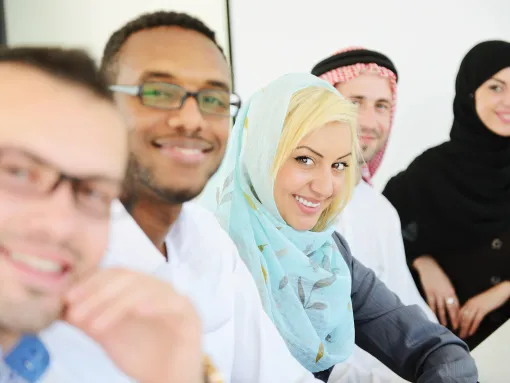
Uses these resources to explore and commemorate the rich history and culture of people who are Arab American as well as analyze the bias and discrimination faced by them.
Table Talk: Family Conversations about Current EventsOnline games have revolutionized the way we connect, compete and experience the world, captivating millions of adults and young people in thrilling virtual adventures that know no boundaries. In fact, the global player base for video games was estimated to reach 3.6 billion people in 2025 and predicted to reach 3.9 billion by 2028. In particular, teenagers are using video games at higher and…
Civics Lesson
GRADE LEVEL: High School What are Human Rights?
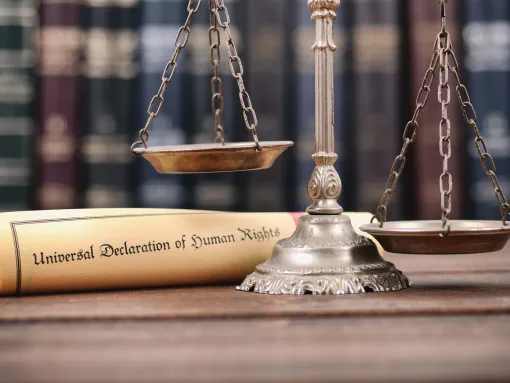
What is the Universal Declaration of Human Rights?
In 1946, in the immediate aftermath of World War II, with hopes of preventing future atrocities, an international committee with varied legal and cultural backgrounds began to draft the Universal Declaration of Human Rights (UDHR). The UDHR was proclaimed by the new United Nations General Assembly in 1948. This document contains 30 Articles that set a standard…
What is the Electoral College and Why Is it Controversial?
Tools and Strategies
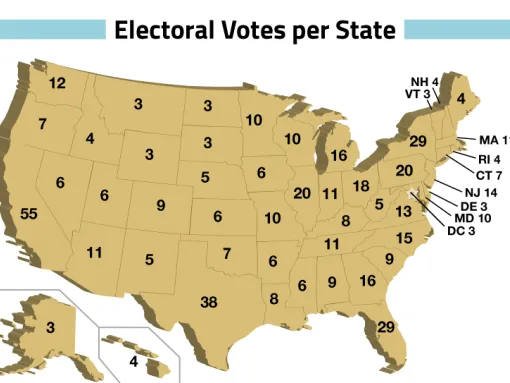
Table Talk: Family Conversations about Current EventsThe Electoral College is an election topic that inspires confusion, controversy and conflict. Many people know that the Electoral College is part of the Presidential election process but may be unsure about its importance and how it works. In the early days of our country’s formation, deciding on the process for electing a U.S. President was a controversial topic. Some suggested that Congress should choose the President. Others…
Civics Lesson
GRADE LEVEL: High School What is the Difference Between a Bill and a Law?
What Bills Have Had Significant Impact on People in the United States?
Why Do Some Bills Pass into Law and Others Do Not?
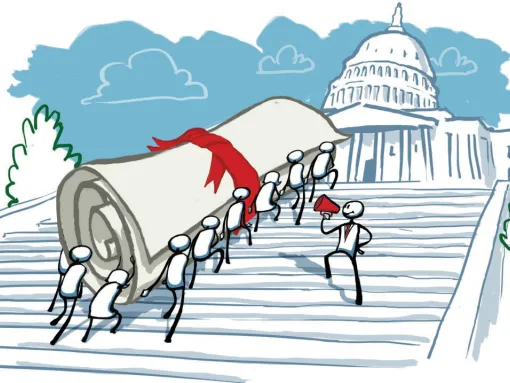
In 1976, Schoolhouse Rock! released “I’m Just a Bill,” an animated video with a catchy tune that educated students around the U.S. about bills. Since then, music has changed, graphics in videos have changed but the actual process of becoming…
Civics Lesson
GRADE LEVEL: High School How Do Lobbyists Impact the Democratic Process?
What are Effective Ways of Lobbying?
How Might I Lobby for My Bill?
“Lobbying” is an effort by individuals and groups to influence government decisions and actions, and specifically the writing of laws. Lobbying can take different forms including writing letters, making phone calls to legislators and meeting with people in the administration. As student activism in…
Echoes & Reflections: Teaching the HolocaustGRADE LEVEL: Middle School, High School
COMMON CORE STANDARDS: Reading, Writing, Speaking and Listening, Language The lessons in this unit increase students’ understanding of Jewish people and awareness that antisemitism did not end after the Holocaust, and provide them with opportunities to learn about the persistence of antisemitism in its contemporary forms. Students investigate the ways in which old ideas about Jews and Judaism have…
Important Books to Explore Bullying and Ally Behavior
Tools and Strategies
While bullying is still a problem in schools, the intersection of bias and bullying can be particularly harmful. Identity-based bullying is when a person is targeted based on an essential part of their identity (e.g., race, immigration status, sexual orientation, religion, or gender identity). It is common in schools and not only impacts the targeted person but everyone else around them that shares their identity. Identity-based bullying can leave all students feeling unsafe and fearful that…
Jewish American Heritage Month: Exploring Jewish Identity
Tools and Strategies
Use this collection of resources for educators and families to help teach about and celebrate Jewish American heritage in schools, communities and at home.
Increase your awareness of religious obligations and ethnic and cultural festivities that may affect students, colleagues and neighbors in your community.
The Pyramid of Hate illustrates the prevalence of bias, hate and oppression in our society. It is organized in escalating levels of attitudes and behavior that grow in complexity from bottom to top. Like a pyramid, the upper levels are supported by the lower levels; unlike a pyramid, the levels are not built consecutively or to demonstrate a ranking of each level. Bias at each level reflects a system of oppression that negatively impacts individuals, institutions and society…
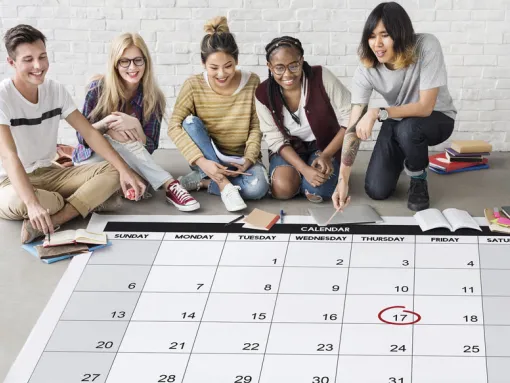
For Educators | For Parents, Families, and Caregivers Rosh Hashanah and Yom Kippur, the High Holidays, are celebrated by Jewish people all over the world. The High Holidays fall on different days each year. For the specific dates each year, check our Calendar of Observances. These and other Jewish holidays fall on different days in our calendar because they follow the Jewish calendar, which has a different number of days than our calendar. The Jewish calendar is a Soli-lunar calendar. …
GRADE LEVEL: High School
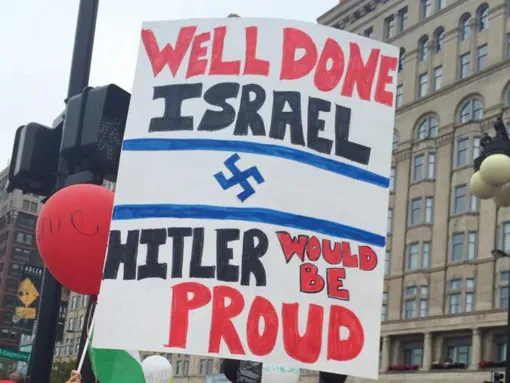
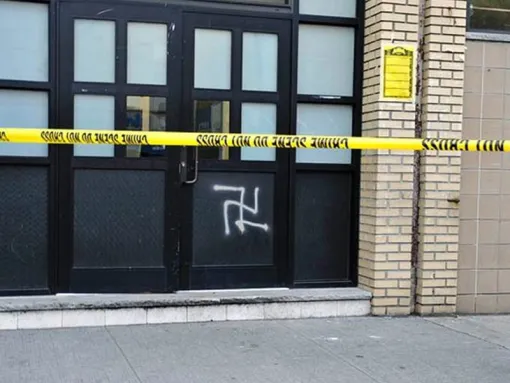
COMMON CORE STANDARDS: Reading, Writing, Language We see symbols every day in all aspects of our lives. Symbols are used to convey ideas, qualities, emotions, material objects/products, opinions and beliefs. Unfortunately, symbols are also used to convey hate and bias. Lately, we have seen a lot of hate symbol graffiti in public spaces and specifically the swastika, which in most circumstances is understood as an expression of antisemitism. There has reportedly…
GRADE LEVEL: Elementary School, Middle School, High School
COMMON CORE STANDARDS: Reading, Writing, Language, Speaking and Listening In commemoration of Women’s History Month, this resource helps educators engage students in thinking broadly and critically about the experience of women and gender in all of its complexity. In highlighting the significant events as well as people that have made a substantial contribution to women’s experience, instruction should…
Can We Talk? Tips for Respectful Conversations in Schools, Workplaces and Communities
Tools and Strategies
Being able to have respectful and constructive conversations is the bedrock of any relationship—whether those connections take place at home, school, work or in communities. However, when controversy or conflict arises, the discussions can quickly become polarized, heated and personal, making it very difficult to have a conversation where different points of view are aired and discussed. These conversations can be about something controversial like politics, current events, moral…
For Educators | For Parents, Families, and Caregivers | For Students Here are some simple things you can do to be an ally to targets of name-calling and bullying. And remember—always think about your safety first when deciding the best way to respond. 1. Support targets, whether you know them or not.Show compassion and encouragement to those who are the targets of bullying behavior by asking if they’re okay, going with them to get help and letting them know you are there for them…