Explore our short, self-guided learning modules to help familiarize educators with ADL's anti-bias framework, core themes and topics.
23 Results
Back
Lessons and resources for Jewish American Heritage Month

Guide for educators of common questions that may arise when teaching Jewish American Heritage lesson plans.

Engage in a family conversation about the origins of Jewish American Heritage Month and why we celebrate and commemorate it.

Children's books about Jewish people and the Jewish experience

This resource assists parents, families and other trusted adults in understanding and helping the young people in their lives who are facing antisemitism—in school, online, in communities.

Help students explore and think critically about films on the Jewish experience.
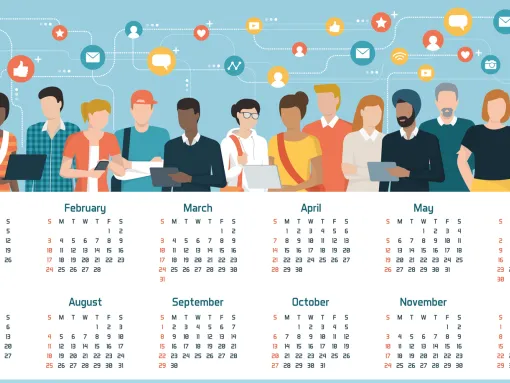
Use this collection of classroom activities about holidays and observances to enhance students' understanding of our multicultural society and world.

Tips and guidance for helping K-12 schools encourage students to become civically engaged, provide safety and protection for all students, and adhere to students’ First Amendment rights.
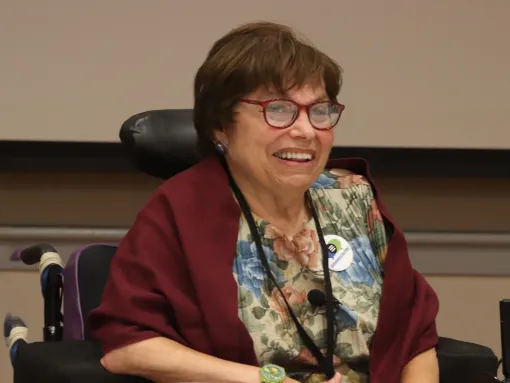
Teach students about disability rights activist Judy Heumann and what work in schools and communities still remains.

There are many benefits to humor. A good joke can ease tension in a stressful situation. Humor can connect people and bring them together. Jokes can bring levity to a situation that begs for lightheartedness. Being funny can signal to others who you are. Humor can even open a conversation that previously felt closed or off-limits. However, jokes and humor, when they target social identity groups, can do the opposite. They can make people feel unsafe, disconnected, excluded and…
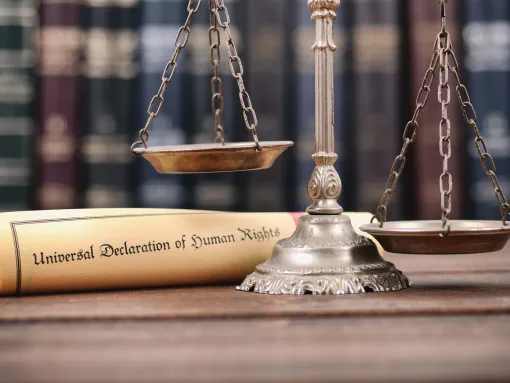
Civics Lesson
GRADE LEVEL: High School What are Human Rights?
What is the Universal Declaration of Human Rights?
In 1946, in the immediate aftermath of World War II, with hopes of preventing future atrocities, an international committee with varied legal and cultural backgrounds began to draft the Universal Declaration of Human Rights (UDHR). The UDHR was proclaimed by the new United Nations General Assembly in 1948. This document contains 30 Articles that set a standard…

Teach students about the role and importance of the youth vote and have them consider barriers to the youth vote.

Echoes & Reflections: Teaching the HolocaustGRADE LEVEL: Middle School, High School
COMMON CORE STANDARDS: Reading, Writing, Speaking and Listening, Language The lessons in this unit increase students’ understanding of Jewish people and awareness that antisemitism did not end after the Holocaust, and provide them with opportunities to learn about the persistence of antisemitism in its contemporary forms. Students investigate the ways in which old ideas about Jews and Judaism have…

Teach students about the U.S. women’s soccer team’s lawsuit against the U.S. Soccer Federation and explore how sexism manifests in a variety of ways in women’s sports.

Increase your awareness of religious obligations and ethnic and cultural festivities that may affect students, colleagues and neighbors in your community.

GRADE LEVEL: High School
COMMON CORE STANDARDS: Reading, Writing, Language We see symbols every day in all aspects of our lives. Symbols are used to convey ideas, qualities, emotions, material objects/products, opinions and beliefs. Unfortunately, symbols are also used to convey hate and bias. Lately, we have seen a lot of hate symbol graffiti in public spaces and specifically the swastika, which in most circumstances is understood as an expression of antisemitism. There has reportedly…
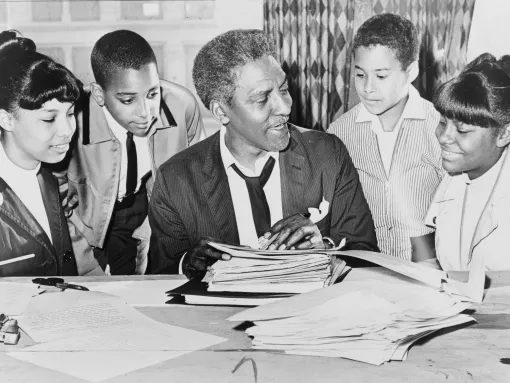
Engage students in activities that get them to think broadly and critically about the Black experience in all of its complexity.
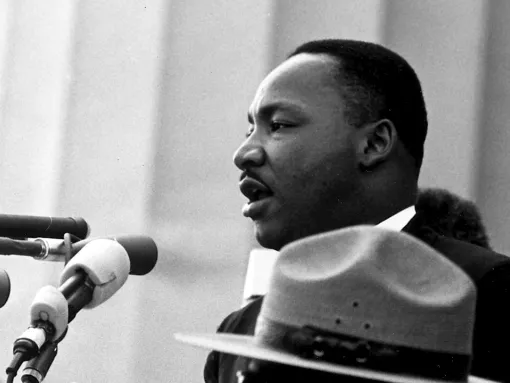
GRADE LEVEL: Elementary School, Middle School, High School
COMMON CORE STANDARDS: Reading, Writing, Speaking and Listening, History/Social Studies In commemoration of Martin Luther King, Jr. Day, this curriculum for grades 3–12 provides grade-specific lessons, resources and extension activities to provide your students opportunities to examine civil rights in the United States past and present. The lessons provide an opportunity for students to delve deeper into Martin Luther King Jr…
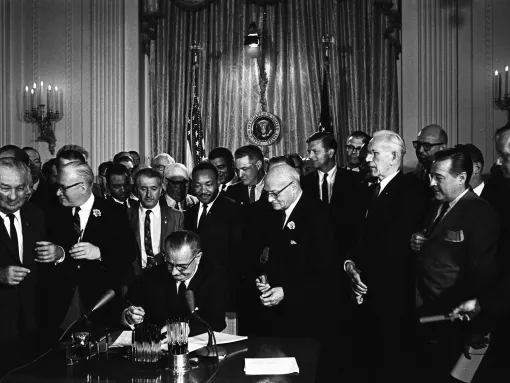
Teach students about the history of discrimination and racism in the U.S., the struggle for civil rights and the Civil Rights Act of 1964.