Explore our short, self-guided learning modules to help familiarize educators with ADL's anti-bias framework, core themes and topics.
19 Results
Back
Teach students about strategies for responding to and challenging bias in school, in particular when they are the target.

Table Talk: Family Conversations about Current EventsAll young people should be able to feel safe, included and respected in their classrooms and schools. Unfortunately, many do not. A recent study of high school students found that nearly four in ten students experienced identity-based bullying or bullying related to an aspect of their identity such as race, religion, sexual orientation, gender identity or physical appearance. How can we listen and learn from young people about…

Table Talk: Family Conversations about Current EventsYou may have heard about “swatting” because it's been in the news recently. What exactly is swatting? Why do people do it? Because young people are exposed to swatting online, on both mainstream websites and the “dark web” (i.e., hidden websites) and because some swatting incidents begin in online gaming or other digital platforms, it is an important topic to discuss with young people. Swatting is &ldquo…

Teach students what biased language is and help them reflect on the reasons why people use it and how they can address and challenge biased words and language.

There are many benefits to humor. A good joke can ease tension in a stressful situation. Humor can connect people and bring them together. Jokes can bring levity to a situation that begs for lightheartedness. Being funny can signal to others who you are. Humor can even open a conversation that previously felt closed or off-limits. However, jokes and humor, when they target social identity groups, can do the opposite. They can make people feel unsafe, disconnected, excluded and…
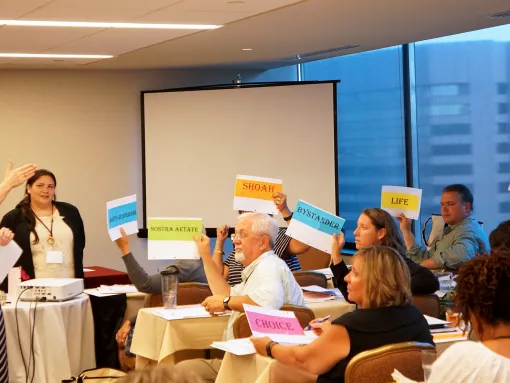
Build skills to recognize and address antisemitism by exploring Jewish identity and unpacking the
definition of antisemitism.

Teach students about the importance and power of symbols and explore with them how hate symbols can cause harm to individuals and society.

Teach students about what gossip and rumors are and the impact they have on others, especially those identity groups which may be more vulnerable to and marginalized by rumors and gossip.

Teach students about the CROWN Act, the need for the bill and have them reflect on real-life examples of hair discrimination.
Civics Lesson
GRADE LEVEL: High School What are Human Rights?
What is the Universal Declaration of Human Rights?
In 1946, in the immediate aftermath of World War II, with hopes of preventing future atrocities, an international committee with varied legal and cultural backgrounds began to draft the Universal Declaration of Human Rights (UDHR). The UDHR was proclaimed by the new United Nations General Assembly in 1948. This document contains 30 Articles that set a standard…
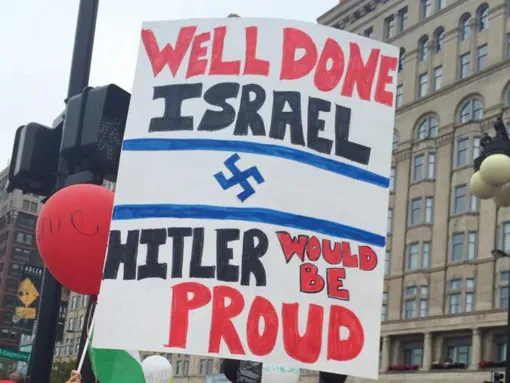
Echoes & Reflections: Teaching the HolocaustGRADE LEVEL: Middle School, High School
COMMON CORE STANDARDS: Reading, Writing, Speaking and Listening, Language The lessons in this unit increase students’ understanding of Jewish people and awareness that antisemitism did not end after the Holocaust, and provide them with opportunities to learn about the persistence of antisemitism in its contemporary forms. Students investigate the ways in which old ideas about Jews and Judaism have…
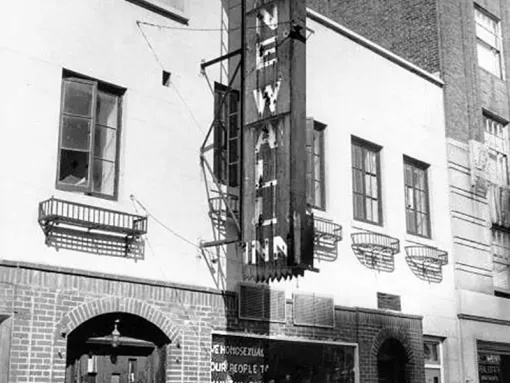
GRADE LEVEL: High School
COMMON CORE STANDARDS: Reading, Writing, Speaking & Listening, Language On June 28, 1969, the Stonewall uprising took place. It began in the early morning at the Stonewall Inn, a gay bar in New York City. As was typical during that time period, police officers entered the bar and arrested employees for selling alcohol without a liquor license, roughed up customers, cleared the bar and arrested customers for not wearing at least three articles of …

Teach students about the U.S. women’s soccer team’s lawsuit against the U.S. Soccer Federation and explore how sexism manifests in a variety of ways in women’s sports.

Teach students about why slurs are and why they are harmful, helping them explore possible responses to slurs when they hear them.
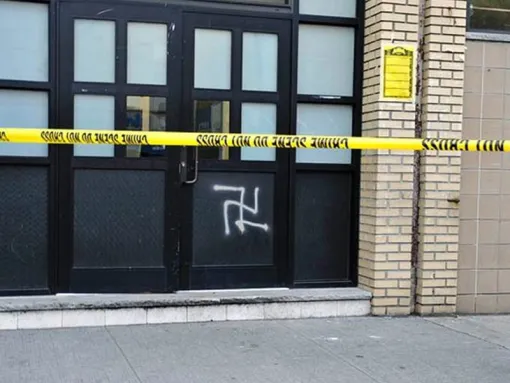
GRADE LEVEL: High School
COMMON CORE STANDARDS: Reading, Writing, Language We see symbols every day in all aspects of our lives. Symbols are used to convey ideas, qualities, emotions, material objects/products, opinions and beliefs. Unfortunately, symbols are also used to convey hate and bias. Lately, we have seen a lot of hate symbol graffiti in public spaces and specifically the swastika, which in most circumstances is understood as an expression of antisemitism. There has reportedly…

Engage students in exploring the topic bullying in the U.S., using children's literature as a foundation for discussion.

Share and discuss with middle and high school students war-time experiences of three child survivors and how the Holocaust affected them.
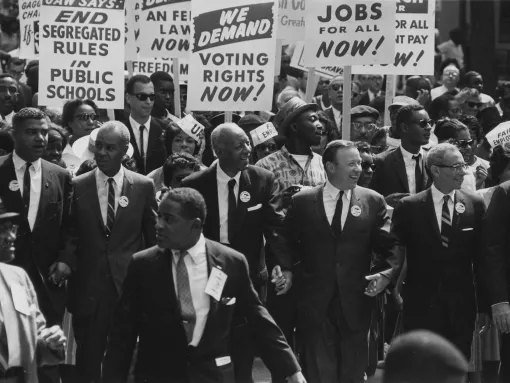
The Civil Rights Movement of the 1950’s and 1960’s came about out of the need and desire for equality and freedom for African Americans and other people of color. Nearly one hundred years after slavery was abolished, there was widespread segregation, discrimination, disenfranchisement and racially motivated violence that permeated all personal and structural aspects of life for black people. “Jim Crow” laws at the local and state levels barred African Americans from…