Education Utility Menu
  • ADL.org
  • Contact
Education Social Links Header
  • Twitter
  • Facebook
  • Instagram
ADL Logo
  • About Us
  • Our Programs
  • Professional Learning
    • Professional Learning Overview
  • Resources
    • All Resources Library
    • Educators Overview
    • Events
    • Books Matter
Donate
ADL Logo
Donate
Education Utility Menu
  • ADL.org
  • Contact
Education Social Links Header
  • Twitter
  • Facebook
  • Instagram

Filters

Topic

  • Ability, Disability & Ableism
  • (-) Anti-Bias Education
  • Anti-Israel Activity
  • Antisemitism Globally
  • Antisemitism in the US
  • Bias, Discrimination & Hate
    • Anti-immigrant
    • Size Bias
  • Bullying & Cyberbullying Prevention
    • Being an Ally
    • Bullying
    • Identity-Based Bullying
  • Civil Rights
  • Community Security
  • Criminal Justice Reform
  • Discrimination
  • Education
  • Extremism, Hate or Terrorism
    • Extremism
    • (-) Terrorism
  • Free Speech
  • Gender & Sexism
    • Biography and History
    • Gender Norms
    • Girls & Women
    • Sexism
  • Genocide & Holocaust
    • Genocide
    • Holocaust
  • Hate Crimes
  • Hate Symbols
    • General Hate Symbols
    • Hate Acronyms/Abbreviations
    • Hate Group Symbols/Logos
    • Hate Slogans/Slang Terms
    • Ku Klux Klan Symbols
    • Neo-Nazi Symbols
    • Numeric Hate Symbols
    • Racist Hand Signs
    • White Supremacist Prison Gang Symbols
  • Immigrant & Refugee Communities
  • Israel
  • Jewish Culture & Antisemitism
    • Antisemitism
    • Biography & History
    • Jewish Culture
  • Law Enforcement & Security
  • LGBTQ+
  • Online Hate & Harassment
  • People & Culture
    • Appearance
    • Arab and Arab-American
    • Asian/Asian-American/South Asian/South-Asian American/Pacific Islander
    • Black, African American, Caribbean
    • Immigrants
    • Latino/Hispanic, Latino-American, Hispanic-American
    • Middle Eastern
    • Misc.
    • Native American & Indigenous People
    • Similarities & Differences
  • Race & Racism
    • Biography & History
    • Racism
  • Racial Justice
  • Religion & Religious Bigotry
    • Christian
    • Hindu
    • Interfaith
    • Judaism
    • Muslim/Muslim-American
  • Religious Freedom
  • Social Justice
    • Child & Youth Activism
    • Civil Rights
    • Human Rights
    • Social Justice Activism
    • Women's Rights
  • Voting Rights
  • Women's Equality
  • Women’s Equity

Type

  • Backgrounder
  • Lesson Plan
  • Tools and Strategies

Center

  • ADL Education

Date

Filters

Sort

74 Results

Back

11 Ways Schools Can Help Students Feel Safe in Challenging Times (In English and en Español)

Tools and Strategies
5th graders posing for a group shot in their classroom
In recent years, we have seen alarming images and biased language in schools and universities: name-calling, hate-filled taunts, vandalism, racial slurs and epithets, offensive graffiti on desks and bathroom walls. In addition, many young people—especially those whose identities have been targeted publicly with words and actions—are fearful and worried. Teachers have had to work overtime to console those students and provide resources to get help. Schools must be places where…
November 16, 2016
Read more about 11 Ways Schools Can Help Students Feel Safe in Challenging Times (In English and en Español)

6 Ways to Be an Ally (In English and en Español)

Tools and Strategies
Female and Male Students Holding Cellphones Debating
For Educators | For Parents, Families, and Caregivers | For Students Here are some simple things you can do to be an ally to targets of name-calling and bullying. And remember—always think about your safety first when deciding the best way to respond. 1. Support targets, whether you know them or not.Show compassion and encouragement to those who are the targets of bullying behavior by asking if they’re okay, going with them to get help and letting them know you are there for them…
April 22, 2016
Read more about 6 Ways to Be an Ally (In English and en Español)

Finding the Balance: Countering Extremism and Combating Stereotypes

Tools and Strategies
High School Students Group Discussion
Young people are exposed to discussions of extremism every day through social media, news and overheard conversations between adults. As an educators, the topic can be challenging to teach because the situation is always changing and evolving and worse--classroom conversations can themselves lead to stereotyping, bias and bigotry when discussing perpetrators, targets and victims.  The following resources will help you teach about extremism while ensuring that the…
April 18, 2016
Read more about Finding the Balance: Countering Extremism and Combating Stereotypes

Recursos educativos en español

Tools and Strategies
Word web concept of learning Spanish
Para fomentar escuelas y aulas respetuosas, inclusivas y equitativas, es importante reconocer la lengua que hablan los alumnos y sus familias. Esas lenguas reflejan y afirman su origen étnico, su cultura y su herencia. Según datos recientes del Censo, 63,7 millones de personas (o el 19,1% del total de la población) que viven en Estados Unidos se identifican como hispanos/latinoamericanos. Además, la mayoría de los hispanos (75%) afirman ser capaces de…
September 09, 2015
Read more about Recursos educativos en español

Words That Heal: Using Children's Literature to Address Bullying

Lesson Plan
Library books on a table with a book open to the center
Engage students in exploring the topic bullying in the U.S., using children's literature as a foundation for discussion.
May 07, 2015
Read more about Words That Heal: Using Children's Literature to Address Bullying

Won't Discussing Differences Promote Prejudice?

Tools and Strategies
Early Childhood Question Corner For Educators | For Parents, Families, and Caregivers Many adults think that talking with children about our differences teaches prejudice. In Anti-Bias Curriculum, Louise Derman-Sparks (1989) debunks that myth and writes that talking about differences does not increase prejudice in children. Whether or not adults discuss differences with children, all children begin to notice differences among people as part of their natural development. It is the messages…
March 14, 2013
Read more about Won't Discussing Differences Promote Prejudice?

Mo'Ne Davis and Gender Stereotypes

Lesson Plan
Mo'Ne Davis Little League World Series Baseball Pitch
GRADE LEVEL: Elementary School COMMON CORE STANDARDS: Reading, Speaking and Listening The First Girl to Pitch a Shutout in the Little League World Series In 2014 Mo’Ne Davis, a 13-year-old girl, made news headlines as the first girl to ever pitch a shutout in the Little League World series. At that time she was considered the “most talked about baseball player on earth right now” according to many observers in the sports world. Mo’Ne (pronounced Moh-nay…
August 27, 2014
Read more about Mo'Ne Davis and Gender Stereotypes

Martin Luther King, Jr. and Civil Rights: Relevancy for Today

Lesson Plan
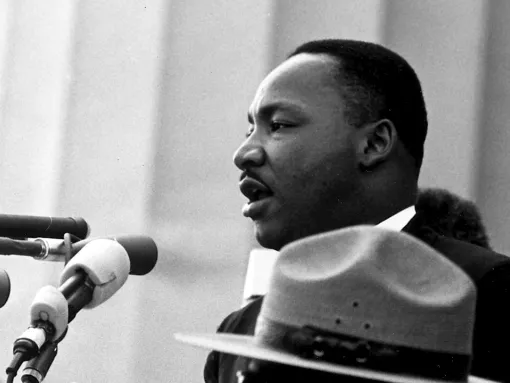
Dr. Martin Luther King Jr March on DC
GRADE LEVEL: Elementary School, Middle School, High School COMMON CORE STANDARDS: Reading, Writing, Speaking and Listening, History/Social Studies In commemoration of Martin Luther King, Jr. Day, this curriculum for grades 3–12 provides grade-specific lessons, resources and extension activities to provide your students opportunities to examine civil rights in the United States past and present. The lessons provide an opportunity for students to delve deeper into Martin Luther King Jr…
November 12, 2014
Read more about Martin Luther King, Jr. and Civil Rights: Relevancy for Today

Winter Holidays: December Dilemma or Teaching Opportunity?

Tools and Strategies
Candles in the Dark
For Educators | For Parents, Families, and Caregivers Winter is a festive time of year because so many holidays are celebrated by people from different religions, cultures and races. We spend time with family and friends, connect with our faith or culture, give and receive gifts and enjoy special foods and treats. However, this time of year—especially in schools and whether it's in-person, online or hybrid—can be a time where some children can feel uncomfortable, excluded, insulted…
November 06, 2014
Read more about Winter Holidays: December Dilemma or Teaching Opportunity?

Cyberbullying: Understanding and Addressing Online Cruelty

Lesson Plan
Online Bullying Concept Keyboard
Engage students in understanding and exploring cyberbullying and the issues raised by online bullying.
December 12, 2014
Read more about Cyberbullying: Understanding and Addressing Online Cruelty

Civil Rights Act of 1964: 7 Ways to Commemorate the Anniversary

Lesson Plan
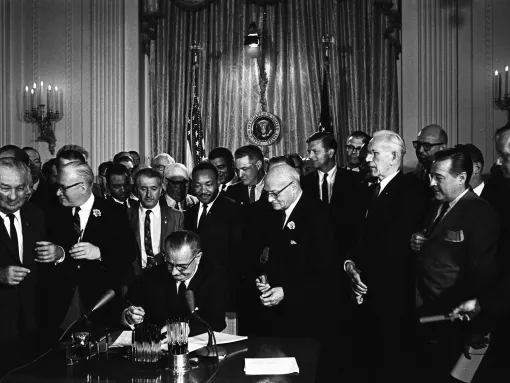
Lyndon B. Johnson Signing Civil Rights Act
Teach students about the history of discrimination and racism in the U.S., the struggle for civil rights and the Civil Rights Act of 1964.
June 09, 2014
Read more about Civil Rights Act of 1964: 7 Ways to Commemorate the Anniversary

70+ Years Later: The Legacy of Brown v. Board of Education

Lesson Plan
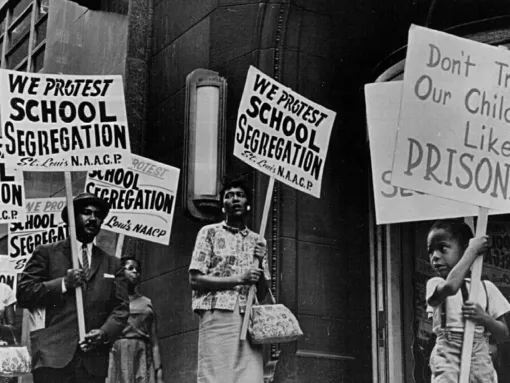
Brown v. Board of Education School Segregation Protest
GRADE LEVEL: Middle School, High School COMMON CORE STANDARDS: Reading, Speaking and Listening, Language “We conclude that in the field of public education the doctrine of ‘separate but equal’ has no place. Separate educational facilities are inherently unequal.” These are the words of the landmark Supreme Court decision on May 17, 1954 that declared segregated schools unconstitutional. More than seventy years later, even though much progress has been made, there are…
May 15, 2014
Read more about 70+ Years Later: The Legacy of Brown v. Board of Education

Who Am I? Identity Poems

Lesson Plan
Elementary School Students Group Standing
GRADE LEVEL: Elementary School COMMON CORE STANDARDS: Reading, Writing, Language Using Poetry to Teach about Identity Reading and writing poetry can provide an opening for young people to explore the various aspects of their identity, including their name, race and ethnicity, physical characteristics and more. April is National Poetry Month, a good opportunity to explore poetry with your students. Because poetry does not require strict sentence structure or the usual grammar rules…
April 11, 2014
Read more about Who Am I? Identity Poems

Civil Rights Movement

Backgrounder
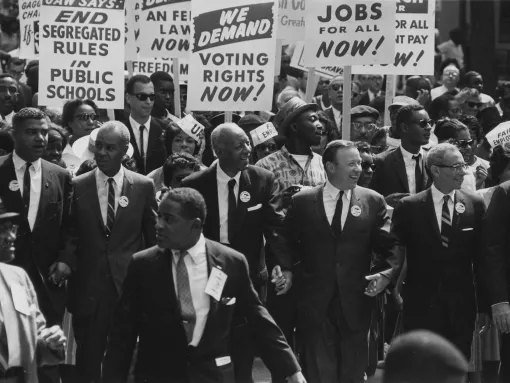
Civil Rights March on Washington
The Civil Rights Movement of the 1950’s and 1960’s came about out of the need and desire for equality and freedom for African Americans and other people of color. Nearly one hundred years after slavery was abolished, there was widespread segregation, discrimination, disenfranchisement and racially motivated violence that permeated all personal and structural aspects of life for black people. “Jim Crow” laws at the local and state levels barred African Americans from…
January 13, 2017
Read more about Civil Rights Movement

Pagination

  • Previous page ‹ Previous
  • First page 1
  • Page 2
  • Page 3
  • Current page 4
  • Next page Next ›
ADL Logo

Anti-Defamation League


P.O. Box 4495


New York, NY 10163


(212) 885.7700

Education Footer
  • College & University
  • Privacy Policy
  • Terms and Conditions
  • Professional Learning
  • Resources
  • Contact
Education Social Links Footer
  • Twitter
  • Facebook
  • Instagram

© 2026 Anti-Defamation League. All Rights Reserved.